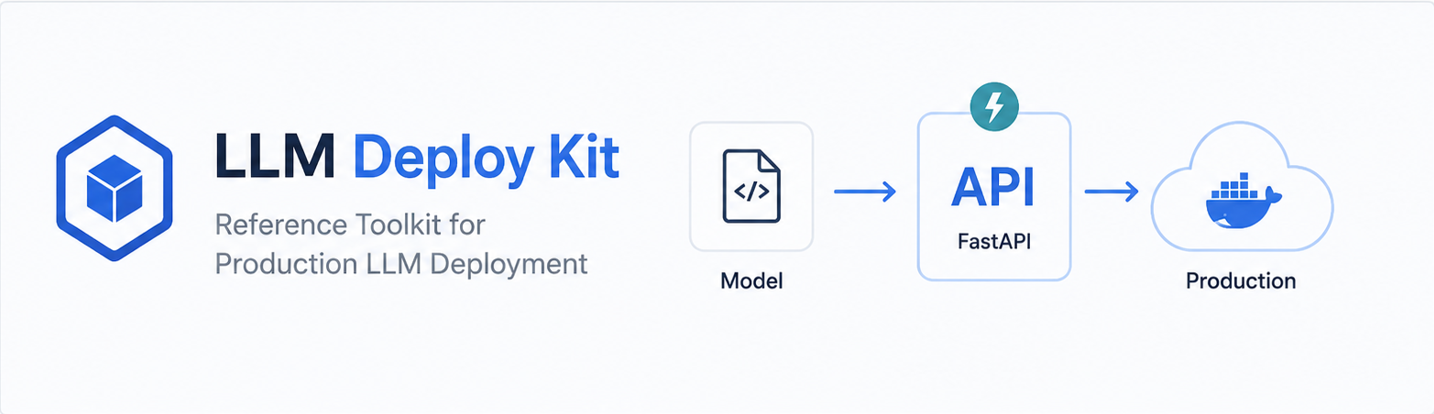
Overview
LLM Deploy Kit provides comprehensive reference implementations and tooling for deploying large language models to production. It includes best practices, patterns, and ready-to-use components for building reliable, scalable LLM applications.
Key Features
- Reference Implementations: Complete examples for common LLM deployment patterns
- Production-Ready Templates: Docker and Kubernetes configurations
- API Serving: FastAPI-based serving with authentication and rate limiting
- Monitoring Integration: Built-in observability and monitoring
- Performance Optimization: Techniques for optimizing LLM inference
- Security Best Practices: Authentication, encryption, and access control
Technical Implementation
Deployment Components
- API Server: FastAPI-based REST API for model serving
- Model Loading: Efficient model loading and caching
- Request Handling: Async request processing and batching
- Response Formatting: Standardized response formats
- Error Handling: Comprehensive error handling and logging
Infrastructure
- Docker containerization
- Kubernetes deployment manifests
- Load balancing configuration
- Scaling strategies
- Health checks and monitoring
Key Capabilities
- Multiple model serving strategies
- Batch processing support
- Streaming response support
- Request validation and sanitization
- Rate limiting and quota management
- Comprehensive logging
- Health monitoring
- Graceful shutdown handling
Code Repository
Explore the implementation on GitHub:
git clone https://github.com/Kernel-ML/llm-deploy-kit.git
cd llm-deploy-kit
docker build -t llm-server .
docker run -p 8000:8000 llm-server
Use Cases
- Deploying open-source LLMs
- Building LLM-powered applications
- Multi-model serving
- API-based LLM access
- Production LLM infrastructure
Future Enhancements
- Support for more model architectures
- Advanced optimization techniques
- Enhanced monitoring and observability
- Multi-GPU serving
- Distributed inference
Technologies Used
PythonDockerKubernetesFastAPI